Everything You Need to Know About the 515 Area Code — Central Iowa’s Telecommunications Identity

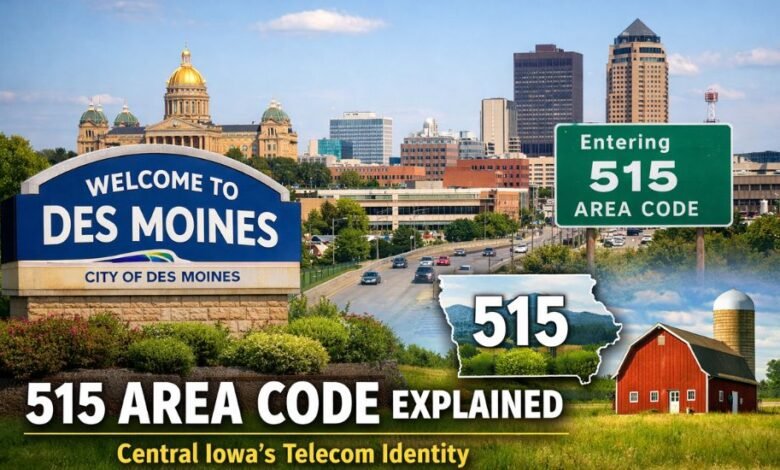
In the digital age, telephone area codes may seem like a relic of the past — yet they remain vital parts of communication infrastructure. One such code that holds both historical and cultural significance is the 515 area code. This number has connected millions of people across central Iowa for more than seven decades, tying together vibrant cities, growing suburbs, universities, businesses, and everyday residents.
From its inception in the original North American Numbering Plan (NANP) in 1947 to its present-day role as the telephone identifier for Iowa’s capital region, area code 515 has a story worth telling. This article dives deep into the history, geography, dialing rules, demographic footprint, economic impact, cultural associations, and practical aspects of the 515 area code, making it ideal for blog readers, telecommunications enthusiasts, or anyone wanting to understand what lies behind these three digits.
What Is Area Code 515?
Area code 515 is a telephone area code within the North American Numbering Plan (NANP) designated for much of central and north-central Iowa in the United States. The most recognizable city within this numbering plan area (NPA) is Des Moines, the capital of Iowa and its most populous urban center.
Over time, this area code has become closely associated with central Iowa’s cultural identity, economic activity, residential growth, and technological connectivity. It covers both urban and rural areas, connecting people across diverse communities.
Historical Overview: How 515 Got Started
To understand the 515 area code, we need to travel back to 1947 — the year the North American Numbering Plan (NANP) was first implemented. NANP was developed to streamline long-distance dialing across the United States, Canada, and parts of the Caribbean without operator assistance. At that time, AT&T and the Bell System assigned area codes with specific numbering rules designed for rotary telephone technology.
Area code 515 was one of the original 86 area codes established in NANP’s initial rollout. Originally, it covered a substantial portion of central Iowa, stretching from near the Minnesota border in the north to the Missouri border far to the south. It was paired with the Bell System’s long-distance network, and for decades, it served the region without major changes.
Over time, population growth and the expansion of telecommunications services (including mobile phones, faxes, and internet dial-up) increased the demand for phone numbers in the region. By 2000, the number demand necessitated a geographic split, leading to the creation of area code 641 from the eastern and southern portions of the original 515 area. Following that split, 515 retained central and north-central Iowa, especially the Des Moines metropolitan area.
This historical evolution reflects not only population shifts but also broader changes in technology and communications needs over decades.
Geographic Coverage & Major Cities
Today, area code 515 serves a broad swath of central Iowa, including urban centers, thriving suburbs, academic hubs, agricultural towns, and rural communities. It spans multiple counties and more than 100 cities.
Here are some of the most significant population centers within the 515 region:
- Des Moines – The capital city of Iowa and the largest city in the area. It’s an economic, cultural, and political hub.
- Ames – Home to Iowa State University, a major center for research, education, and innovation.
- West Des Moines – A thriving suburb with growing business and residential communities.
- Ankeny – A fast-growing suburban city with diverse residential and commercial growth.
- Urbandale, Clive, and Altoona – Additional suburban communities contributing to the greater Des Moines metropolitan area.
- Fort Dodge and Boone – Smaller cities important for local commerce and connectivity.
Collectively, these cities form the core of central Iowa’s economic and social landscape. Beyond these major centers, the 515 area code reaches dozens of smaller towns, rural communities, and unincorporated areas, spanning counties such as Polk, Story, Dallas, Webster, Boone, and more.
Dialing Rules & Modern Technical Requirements
In the early decades of telephone service, local calls could often be dialed with 7 digits, omitting the area code for numbers within the same region. However, that changed with the introduction of nationwide three-digit services like 988, which was designated in 2020 as the National Suicide Prevention Lifeline number. This implementation required certain existing area codes — including 515 — to adopt mandatory 10-digit dialing to prevent conflicts with local exchange codes that used 988.
Today, whether you are dialing from one 515 number to another or calling from outside the region, you must use the full 10-digit format (515-XXX-XXXX) for successful connection. For long-distance dialing from outside the 515 region, the standard format becomes 1-515-XXX-XXXX, aligning with NANP requirements.
No overlay area code currently exists for 515, meaning that all phone numbers in the region use this single three-digit code.
Demographics & Community Snapshot
Although telephone area codes are not designed for demographic analysis, many organizations use area code regions as proxies for population and economic data. According to community and data aggregation sites, the area code 515 region reflects a diverse blend of urban and rural residents, with a relatively balanced gender split and a median age characteristic of U.S. national averages.
Demographic highlights for the 515 area code region include:
- Rough gender distribution with approximately half male and half female residents.
- Median age around late 30s, reflecting working-age adults with families and careers.
- Household incomes showing a significant portion of two-income families and a healthy median household income.
- A robust blend of educational attainment levels, including college and postgraduate degrees.
These numbers indicate that the 515 area code region is demographically stable and economically active, with a broad mix of young professionals, families, students, and long-time residents.
Economic Importance of the 515 Area Code
Area code 515 isn’t just a telecommunications label; it represents the hub of central Iowa’s economic engine. Des Moines, in particular, is known nationally for its influence in sectors like insurance, finance, technology, and government services. This economic diversity is supported by strong local and regional connectivity, much of which hinges on reliable telephony.
Businesses benefit from having a local 515 number, as phone systems that reflect the area code are perceived as community-rooted — which can improve customer engagement. Local phone numbers can help small businesses build trust, increase contact rates, and reinforce brand identity in a regional context.
The area’s business landscape includes everything from startups and small services to major corporate headquarters, educational institutions like Iowa State University, government agencies, healthcare providers, and manufacturing operations.
Cultural & Popular Associations
Area code 515 carries cultural weight in Iowa. One of the most notable nods comes from the world of music: the heavy metal band Slipknot, which originated from Des Moines, named a track “(515)” on their album Iowa as a tribute to their home region. This underscores how area codes can transcend mere utilities and become part of local identity and pride.
Beyond music, residents often display area code numbers on apparel, stickers, business branding, and online profiles — a phenomenon seen in many regions where phone numbers become part of cultural affiliation.
Practical Tips for Dialing & Calls
If you plan to call within or outside the 515 area code region, here’s how to handle different scenarios:
Local Calls:
Use the full 10-digit number — that includes the 515 area code + the 7-digit subscriber number. This applies even for calls within the same region.
Long-Distance Calls:
When calling from outside area code 515, dial 1 + 515 + the subscriber number.
International Calls:
From overseas, dial the U.S. country code +1, then the 10-digit number.
Industry experts also advise being cautious with unknown 515 calls; like many area codes, scammers can spoof local numbers to make calls appear familiar. Always verify unknown callers before sharing personal information.
Looking Ahead: The Future of Area Code 515
As communication technologies evolve, so does the role of area codes. While voice calling remains important, mobile phones, internet protocols, VoIP services, and messaging platforms are changing how we think about phone numbers. Still, area codes like 515 will continue to serve as geographic anchors and identifiers.
At present, no new overlay or split has been announced for 515, suggesting sufficient numbering resources under current demand. Should future changes be necessary, regulatory authorities such as the North American Numbering Plan Administration (NANPA) and the Federal Communications Commission (FCC) will manage allocations to ensure seamless connectivity.
Conclusion
The 515 area code stands as a testament to the growth of communication infrastructure in the United States and the unique character of central Iowa. Established in 1947, reshaped by splits and regulatory changes, and embedded in local culture, 515 connects people, businesses, cities, and history. From Des Moines’ bustling economy to Ames’ academic energy and the broader communities spread across central Iowa, this area code has evolved into much more than just a set of digits — it’s a piece of regional identity.