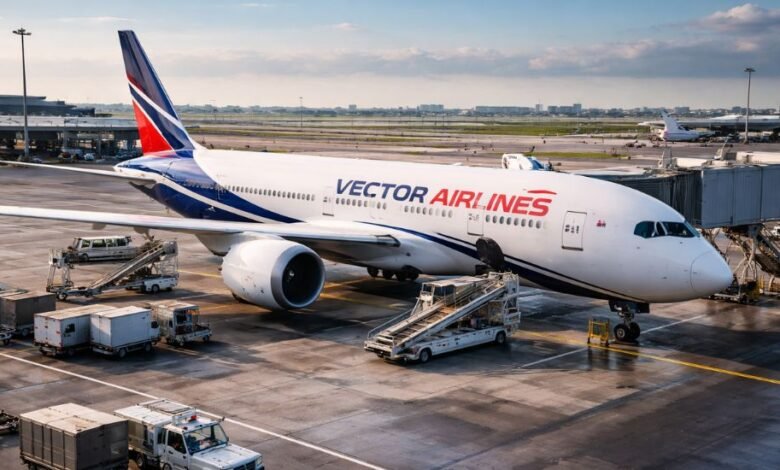
The aviation industry is filled with well-known airline brands that connect people and goods across the world. However, not every airline name found on the internet belongs to a large commercial carrier. One such interesting name is Vector Airlines. While it may appear like a fully operational airline at first glance, deeper research reveals that Vector Airlines is often associated with aviation simulations, conceptual airline projects, and discussions within aviation communities rather than a major real-world airline company.
Despite this, the concept of Vector Airlines continues to generate interest among aviation enthusiasts, bloggers, and simulation gamers. The name itself carries a strong and futuristic appeal, making it suitable for aviation branding and digital airline projects. In this article, we will explore the concept of Vector Airlines, its references in aviation communities, possible origins, and how similar aviation companies using the “Vector” name operate within the aviation industry.
Understanding the Name “Vector” in Aviation
The word vector has a special meaning in aviation and navigation. In aviation terms, a vector refers to a direction given to an aircraft by air traffic control in order to guide it safely through the airspace.
Air traffic controllers frequently provide vectors to pilots to help them:
- Adjust their flight path
- Avoid other aircraft
- Approach airports safely
- Navigate through congested airspace
Because of this technical aviation meaning, the word “vector” has become a popular naming element for aviation-related companies, airlines, and aerospace organizations. It symbolizes direction, precision, control, and technological advancement—qualities that are highly valued in aviation.
For this reason, the name Vector Airlines sounds like a professional airline brand even if it does not exist as a major global airline.
Origins and References to Vector Airlines
The term Vector Airlines has appeared in several aviation-related contexts online, particularly in aviation simulation communities. Some online references describe Vector Airlines as a fictional airline created for simulation environments and aviation-themed games.
In these simulation communities, virtual airlines are often created by enthusiasts who want to experience airline management, route planning, fleet management, and operational challenges without running a real airline.
According to some aviation simulation references, Vector Airlines has been described as:
- Founded in the mid-2000s
- Based in Chicago, United States
- Operating from Chicago O’Hare International Airport
- Designed as a virtual airline concept
Virtual airlines usually simulate real airline operations, including:
- Pilot rosters
- Flight schedules
- Aircraft fleets
- Airport hubs
- Route networks
Participants fly simulated aircraft in platforms such as Microsoft Flight Simulator or X-Plane while following the operational structure of the virtual airline.
This is one of the primary contexts where the name Vector Airlines appears.
Virtual Airlines and Their Growing Popularity
The concept of virtual airlines has become extremely popular among aviation enthusiasts. A virtual airline is essentially a community where flight simulator pilots operate flights under a shared airline brand.
These organizations simulate real-world airline operations while allowing participants to enjoy aviation as a hobby.
Virtual airlines typically include features such as:
- Pilot training programs
- Scheduled flights
- Flight tracking systems
- Online communities and forums
- Fleet management systems
Members often fly routes using realistic procedures, making the experience both entertaining and educational.
Vector Airlines appears to be part of this type of aviation culture, where enthusiasts create airline brands and operational structures for simulation purposes.
Possible Fleet and Route Concepts
Since Vector Airlines is mostly referenced as a conceptual or simulated airline, its fleet and route structure can vary depending on the specific community using the name. However, many virtual airlines follow realistic airline models when designing their fleets.
A typical airline concept like Vector Airlines could operate aircraft such as:
Narrow-Body Aircraft
These aircraft are typically used for short- to medium-haul flights.
Examples include:
- Boeing 737
- Airbus A320
- Airbus A220
Wide-Body Aircraft
Wide-body aircraft are used for long-haul international routes.
Examples include:
- Boeing 787 Dreamliner
- Airbus A330
- Boeing 777
Regional Aircraft
Regional aircraft are designed for shorter routes between smaller cities.
Examples include:
- Embraer E-Jets
- Bombardier CRJ series
A conceptual airline such as Vector Airlines could operate a mix of these aircraft to simulate real airline operations across domestic and international routes.
Potential Hub Locations
Many references associate Vector Airlines with Chicago, which is one of the largest aviation hubs in the United States.
Chicago O’Hare International Airport
Chicago O’Hare is among the busiest airports in the world and serves as a major hub for international and domestic flights.
Key features of Chicago O’Hare include:
- Multiple runways capable of handling heavy traffic
- International connectivity to Europe, Asia, and the Middle East
- Strong domestic network across the United States
- Major airline hub operations
If Vector Airlines were a real airline, Chicago would be a strategic location for a headquarters or primary hub due to its central geographic position and strong aviation infrastructure.
Aviation Companies with the “Vector” Name
Although Vector Airlines itself is not widely recognized as a commercial airline, several aviation-related companies use the name “Vector.”
These companies operate in various segments of the aviation industry.
Vector Aviation
Vector Aviation is involved in aviation management and aviation services. Companies using this name often provide services such as:
- Airline representation
- Cargo logistics
- Charter services
- Aviation consultancy
- Tourism and travel solutions
These services support airline operations but do not necessarily involve running an airline themselves.
Vector Aircraft Services
Vector Aircraft Services focuses on aircraft technical management and aviation consultancy. Companies operating under this name may provide services such as:
- Aircraft maintenance oversight
- Airworthiness management
- Technical support for airlines
- Aircraft asset management
These services are essential for ensuring aircraft safety and regulatory compliance.
Vector Aviation Group
Some aviation holding companies also use the “Vector” branding. These groups may own or manage multiple aviation businesses, including:
- Airline operations
- Aircraft leasing companies
- Maintenance organizations
- Aviation training providers
Such groups play an important role in supporting airline infrastructure.
Branding Potential of Vector Airlines
The name Vector Airlines has strong branding potential for an airline or aviation-related company.
Several characteristics make the name appealing:
Modern Sound
The word vector sounds modern and technological, making it suitable for an airline brand in the digital age.
Aviation Relevance
Because vector is a technical aviation term, the name naturally fits within the aviation industry.
Global Appeal
The word vector is widely recognized in science, mathematics, and engineering, giving the name international relevance.
Professional Identity
A name like Vector Airlines suggests precision, direction, and innovation—qualities associated with aviation safety and efficiency.
For these reasons, the name could easily be adopted by a startup airline, aviation consultancy, or even an aerospace technology company.
Could Vector Airlines Become a Real Airline?
Although Vector Airlines is currently referenced mainly in simulation communities, it is entirely possible that a real airline could use the name in the future.
Launching an airline requires significant resources, including:
- Aircraft acquisition or leasing
- Regulatory approval
- Operational certification
- Airport partnerships
- Financial investment
If a startup airline were to choose the name Vector Airlines, it could potentially build a strong brand around the idea of precision and innovation in air travel.
Many modern airlines have adopted technology-inspired names to reflect innovation and progress in aviation.
The Role of Aviation Communities in Airline Concepts
Online aviation communities play a major role in developing airline concepts and brands. These communities include:
- Flight simulation enthusiasts
- Aviation bloggers
- Airline design hobbyists
- Aviation history researchers
Within these communities, members often create detailed airline concepts, including:
- Fleet designs
- Airline liveries
- Route maps
- Marketing strategies
Vector Airlines appears to be one such concept that gained attention within these communities.
The Future of Digital and Virtual Airlines
With advancements in simulation technology, virtual airlines have become more sophisticated than ever before. Modern flight simulators provide highly realistic environments where enthusiasts can experience airline operations in great detail.
Many virtual airlines operate with systems that track flights, monitor pilot performance, and simulate airline economics.
As simulation technology continues to evolve, airline concepts like Vector Airlines may continue to grow within aviation communities.
Some virtual airlines even collaborate with real aviation organizations for training and educational purposes.
Final Thoughts
Vector Airlines represents an interesting example of how aviation branding and digital aviation communities intersect. Although it is not widely recognized as a real-world commercial airline, the name has appeared in various aviation simulation environments and conceptual airline discussions.
The term itself reflects important aviation principles such as direction, navigation, and control. Because of its strong aviation relevance and modern appeal, Vector Airlines remains a compelling airline concept.
As aviation communities and flight simulation technology continue to grow, concepts like Vector Airlines may continue to inspire aviation enthusiasts around the world.
For readers interested in learning more about aviation concepts, airline history, and emerging aviation trends, platforms like marketblog provide valuable insights and discussions about the aviation industry and many other trending topics.