James Ker-Lindsay: A Leading Voice in International Relations and Conflict Resolution

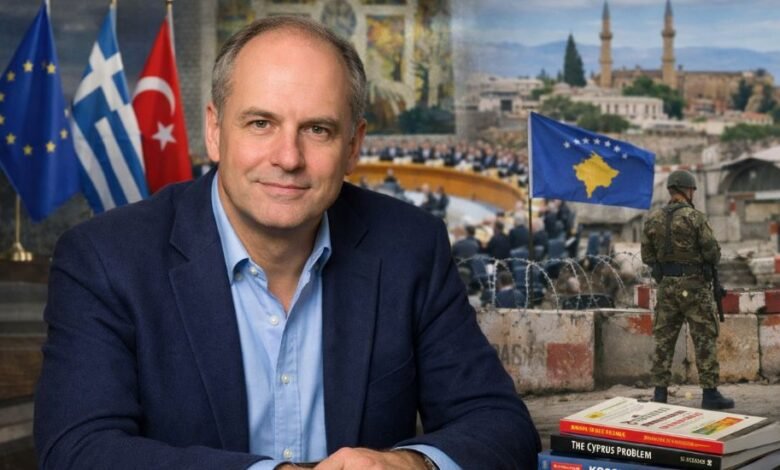
In the world of international politics and diplomacy, few scholars have contributed as consistently to the understanding of conflict resolution and contested statehood as James Ker-Lindsay. Known for his deep expertise in international relations, secession movements, and the geopolitics of the Balkans and Eastern Mediterranean, Ker-Lindsay has become one of the most recognized academics studying modern diplomatic disputes. Through his research, books, media appearances, and educational outreach, he has helped explain complex international issues to both academic audiences and the broader public.
Over the past two decades, James Ker-Lindsay has established himself as a prominent scholar whose work bridges the gap between academic research and real-world geopolitical developments. His studies on conflicts such as the Cyprus issue, Kosovo’s independence, and international recognition disputes have contributed significantly to the field of international relations.
Early Life and Background
James Ker-Lindsay was born on May 4, 1972, in the United Kingdom. From an early age, he showed an interest in global politics and international affairs. Growing up during a time when the Cold War was ending and new geopolitical conflicts were emerging in Europe, he developed a fascination with the political transformations happening around the world.
His interest in politics eventually led him to pursue higher education focused on economics, diplomacy, and international conflict. These academic foundations later shaped his career as a scholar who examines the political dynamics behind territorial disputes, state recognition, and diplomatic negotiations.
Education and Academic Development
James Ker-Lindsay pursued higher education in the United Kingdom, where he developed a strong academic background in political science and international relations.
He first completed a Bachelor of Science in Economics at the University of London, which provided him with a solid understanding of global economic systems and international policy frameworks. Following this, he pursued a Master’s degree at the University of Kent, a university well known for its research in international relations and conflict studies.
Later, he completed his PhD in International Conflict Analysis, where he focused on understanding the political, diplomatic, and historical factors that shape international disputes. His doctoral research laid the foundation for many of the themes that would later dominate his academic career, particularly the study of unresolved conflicts and contested states.
Academic Career and Professional Roles
Throughout his career, James Ker-Lindsay has held positions at several prestigious universities and research institutions. He is widely known for his association with the London School of Economics (LSE), where he has served as a Visiting Professor and has been involved in research connected to European and international politics.
In addition to his work at LSE, he has also served as a Research Associate at the University of Oxford, contributing to research programs focusing on international diplomacy and geopolitical conflict.
His academic career has also included teaching and visiting appointments at institutions around the world. These roles have allowed him to collaborate with scholars and policymakers in different regions while sharing his expertise on international relations and conflict resolution.
Beyond these positions, Ker-Lindsay has also been affiliated with several universities including:
- Boston University
- Wake Forest University
- University of Kent
- University of Pristina
Through these academic roles, he has mentored students, supervised research projects, and contributed to the development of future scholars in international relations.
Research Focus and Academic Specializations
One of the defining aspects of James Ker-Lindsay’s career is his focus on secession, contested statehood, and international recognition. These issues have become increasingly important in global politics, as various regions around the world have sought independence or greater political autonomy.
Ker-Lindsay’s research explores the political and diplomatic processes through which territories attempt to gain international recognition as independent states. His work examines why some independence movements succeed while others remain unrecognized or disputed.
His main areas of research include:
- International relations
- Conflict resolution and peace processes
- Secession and state recognition
- European Union enlargement
- Diplomacy and international negotiations
These research areas intersect with real-world conflicts that continue to shape global politics.
Expertise in the Balkans and Eastern Mediterranean
A significant portion of Ker-Lindsay’s research focuses on Southeast Europe and the Eastern Mediterranean, regions that have experienced numerous geopolitical tensions and unresolved political disputes.
One of the key issues he has studied extensively is the Cyprus conflict, a longstanding dispute between Greek Cypriots and Turkish Cypriots that has divided the island since 1974. Ker-Lindsay’s research has analyzed various peace proposals, diplomatic negotiations, and international mediation efforts aimed at resolving the conflict.
Another major area of his work involves Kosovo’s declaration of independence in 2008 and the international debate surrounding its recognition. His research examines how Kosovo became a partially recognized state and the implications of this recognition for international law and diplomacy.
Additionally, he has explored issues involving Greek-Turkish relations, which have historically been marked by territorial disputes and political tensions.
By focusing on these complex regional conflicts, Ker-Lindsay has contributed valuable insights into how diplomacy, international law, and political negotiations influence the resolution of geopolitical disputes.
Work Beyond Academia
Although James Ker-Lindsay is primarily known as an academic, he has also been involved in policy analysis and diplomatic initiatives.
During the late 1990s, he served as the Coordinator of the Greek-Turkish Forum, an initiative designed to promote dialogue and cooperation between Greece and Turkey. The forum aimed to improve diplomatic relations between the two countries and explore ways to reduce regional tensions.
He also worked as a political analyst covering Greek and Cypriot politics for the Economist Intelligence Unit, where he provided research and analysis on regional political developments.
These experiences allowed him to engage directly with real-world diplomacy and policy-making, strengthening the practical relevance of his academic research.
Books and Publications
James Ker-Lindsay is a highly prolific writer who has authored numerous books, journal articles, and research papers. His publications have become important resources for scholars, policymakers, and students interested in international relations.
Over the course of his career, he has written more than fifteen books and dozens of academic articles. His writing often focuses on diplomatic negotiations, state recognition, and international conflict.
Some of his most notable books include:
The Cyprus Problem: What Everyone Needs to Know
This book provides a clear and accessible overview of the Cyprus dispute, explaining its historical origins, political dynamics, and potential future solutions.
Kosovo: The Path to Contested Statehood in the Balkans
In this work, Ker-Lindsay analyzes Kosovo’s path toward independence and the international debates surrounding its recognition.
The Foreign Policy of Counter-Secession
This book examines how countries respond when regions attempt to break away and form independent states.
These publications have helped shape academic discussions about international law, diplomacy, and the politics of secession.
Media Presence and Public Commentary
In addition to his academic work, James Ker-Lindsay is widely recognized as a commentator on international politics. He frequently appears in global media outlets to provide expert analysis on geopolitical conflicts and diplomatic developments.
His commentary has appeared in international media such as:
- BBC
- CNN
- Reuters
- Al Jazeera
These appearances allow him to explain complex international issues to a broader audience and contribute to public discussions about global politics.
Educational Outreach and YouTube Channel
In recent years, Ker-Lindsay has expanded his outreach through digital platforms, particularly YouTube, where he runs a popular educational channel about international relations and geopolitics.
His videos cover topics such as:
- Unrecognized countries
- Border disputes
- Geopolitical conflicts
- International law and diplomacy
- Global political trends
Through these videos, he breaks down complicated political issues into clear explanations that are accessible to viewers around the world.
This effort has made him one of the few academics successfully combining traditional scholarship with modern digital education.
Influence in International Relations
James Ker-Lindsay’s influence extends across multiple areas of international relations. His work is frequently cited by scholars studying secession, contested states, and diplomatic conflict resolution.
He is considered one of the leading experts on the politics of state recognition, a topic that has become increasingly important as new independence movements emerge across the world.
By combining academic rigor with accessible communication, he has played an important role in helping both policymakers and the public understand complex geopolitical disputes.
Legacy and Continuing Work
As global politics continue to evolve, the themes that Ker-Lindsay studies remain highly relevant. Issues such as territorial disputes, independence movements, and diplomatic negotiations are central to many modern conflicts.
His ongoing research, publications, and public engagement ensure that his work will continue to shape discussions about international relations for years to come.
Through his academic contributions, policy engagement, and educational initiatives, James Ker-Lindsay has established himself as a respected voice in the study of global politics.
Readers who are interested in geopolitics, diplomacy, and international conflicts can continue exploring insights and discussions about experts like James Ker-Lindsay and global affairs through informative platforms such as marketblog, where topics related to international politics, global trends, and influential thinkers are regularly explored.