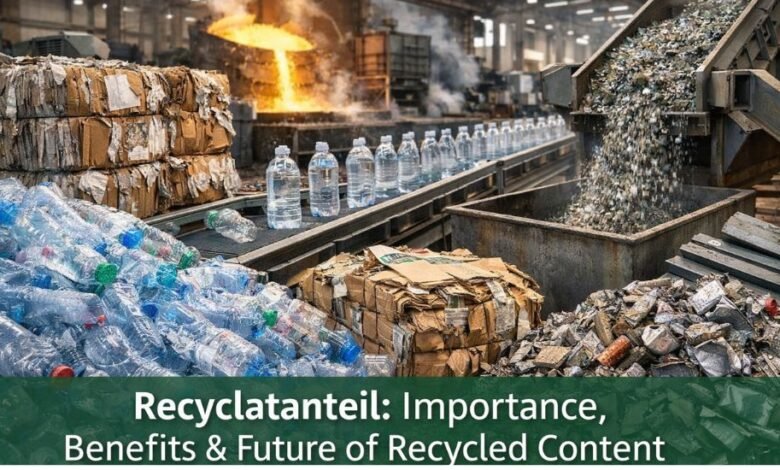
In recent years, sustainability has shifted from a niche concern to a global priority. Governments, industries, and consumers are all seeking ways to reduce environmental impact and preserve natural resources. While recycling has long been promoted as a solution, a deeper and more meaningful metric has emerged: Recyclatanteil.
Recyclatanteil, a German term increasingly used in sustainability discussions, refers to the proportion of recycled material used in the production of new products. Unlike traditional recycling metrics, which focus on how much waste is collected and processed, recyclatanteil measures how effectively those recycled materials are reintegrated into the production cycle.
This concept plays a crucial role in transitioning from a linear economy—where resources are used and discarded—to a circular economy, where materials are continuously reused. In this article, we will explore the meaning, importance, applications, challenges, and future of recyclatanteil in detail.
What is Recyclatanteil?
Recyclatanteil literally translates to “recycled content share.” It represents the percentage of recycled material used in manufacturing a product.
For example, if a plastic bottle is made using 40% recycled plastic and 60% virgin material, its recyclatanteil is 40%. This metric provides insight into how much of the product contributes to resource conservation and waste reduction.
Recyclatanteil is typically expressed as a percentage and can apply to a wide range of materials, including plastics, metals, paper, glass, and even construction materials.
Why Recyclatanteil Matters
1. Moving Beyond Recycling Rates
Traditional recycling rates measure how much waste is collected and processed. However, they do not guarantee that recycled materials are actually reused in new products.
Recyclatanteil fills this gap by focusing on the demand side of recycling. It answers the critical question:
Are recycled materials truly being used again?
A high recycling rate without a high recyclatanteil indicates inefficiency in the system. Materials may be collected but not effectively reused.
2. Supporting the Circular Economy
The circular economy is built on the idea of keeping materials in use for as long as possible. Recyclatanteil is a direct indicator of how well this system is functioning.
By increasing recyclatanteil:
- Products become more sustainable
- Waste is reduced
- Resource loops are closed
Without sufficient recycled content in production, the circular economy cannot function effectively.
3. Environmental Benefits
Increasing recyclatanteil has significant environmental advantages:
- Reduced resource extraction: Less need for raw materials such as oil, minerals, and timber
- Lower energy consumption: Recycling often uses less energy than producing new materials
- Reduced greenhouse gas emissions: Lower carbon footprint across supply chains
- Waste reduction: Less material ends up in landfills or incinerators
For example, using recycled aluminum can save up to 95% of the energy required to produce new aluminum from raw ore.
Recyclatanteil vs Recycling Rate
It is important to distinguish between recyclatanteil and recycling rate, as they are often confused.
| Aspect | Recyclatanteil | Recycling Rate |
|---|---|---|
| Focus | Use of recycled materials in products | Amount of waste recycled |
| Stage | Production | Waste management |
| Purpose | Measures circularity | Measures waste handling efficiency |
A country may have a high recycling rate but still rely heavily on virgin materials if recyclatanteil is low. Therefore, both metrics must be considered together to assess true sustainability.
Types of Recycled Materials (Recyclates)
Recyclatanteil depends on the availability and quality of recyclates. These are generally divided into two categories:
1. Post-Consumer Recyclate (PCR)
- Derived from products that have been used and discarded by consumers
- Examples: used plastic bottles, packaging waste, old newspapers
2. Post-Industrial Recyclate (PIR)
- Generated from manufacturing waste
- Examples: production scraps, defective items
PCR is often considered more valuable for sustainability because it directly reduces consumer waste, while PIR focuses on improving industrial efficiency.
Applications of Recyclatanteil Across Industries
Recyclatanteil is widely used across various sectors:
1. Packaging Industry
Plastic packaging is one of the largest areas where recyclatanteil is applied. Many companies now use recycled PET (rPET) in bottles and containers.
2. Paper and Cardboard
Recycled paper products often have high recyclatanteil, sometimes exceeding 80%.
3. Glass Manufacturing
Glass can be recycled indefinitely without losing quality, making it ideal for high recyclatanteil applications.
4. Metals
Aluminum and steel industries rely heavily on recycled materials due to energy savings and cost efficiency.
5. Construction
Recycled concrete, asphalt, and insulation materials are increasingly used in sustainable building projects.
6. Automotive and Electronics
Manufacturers are incorporating recycled plastics and metals into vehicles and electronic devices to meet sustainability targets.
Benefits for Businesses
Adopting a higher recyclatanteil offers several advantages for companies:
1. Cost Efficiency
In some cases, recycled materials are cheaper than virgin materials, especially when raw material prices fluctuate.
2. Regulatory Compliance
Governments are introducing regulations requiring minimum recycled content in products.
3. Brand Image
Consumers are increasingly eco-conscious. Products with higher recyclatanteil are seen as more sustainable and responsible.
4. Competitive Advantage
Companies that prioritize recyclatanteil can differentiate themselves in the market.
Challenges in Increasing Recyclatanteil
Despite its benefits, there are several obstacles:
1. Quality Issues
Recycled materials may degrade in quality after multiple cycles, limiting their use in certain applications.
2. Limited Supply
The availability of high-quality recyclates is often insufficient to meet demand.
3. Cost Factors
Processing recycled materials can sometimes be more expensive than using virgin materials.
4. Technical Limitations
Not all materials can be easily recycled or reused without significant processing.
5. Lack of Standardization
There is no universal method for calculating recyclatanteil, leading to inconsistencies across industries.
Policy and Regulations
Governments and international organizations are increasingly focusing on recyclatanteil as a key sustainability metric.
1. European Union Initiatives
The EU has introduced targets for recycled content in plastic packaging, aiming to increase recyclatanteil across industries.
2. National Policies
Many countries are implementing laws that require minimum recycled content in products such as packaging and construction materials.
3. Corporate Commitments
Major companies have pledged to increase recyclatanteil in their products as part of sustainability goals.
Future Trends
The importance of recyclatanteil is expected to grow significantly in the coming years.
1. Technological Innovation
Advancements in recycling technologies, such as chemical recycling, will improve material quality and availability.
2. Increased Regulation
Governments will likely enforce stricter requirements for recycled content.
3. Consumer Awareness
As consumers become more informed, demand for products with higher recyclatanteil will increase.
4. Circular Design
Products will be designed with recyclability and recycled content in mind from the beginning.
How Companies Can Improve Recyclatanteil
Businesses can take several steps to increase recyclatanteil:
- Use recyclable materials in product design
- Invest in recycling technologies
- Collaborate with suppliers to secure recycled materials
- Educate consumers about recycling
- Set measurable sustainability targets
Conclusion
Recyclatanteil is more than just a technical term—it is a critical indicator of how effectively we are transitioning to a sustainable and circular economy. While recycling rates provide valuable information, they do not tell the full story. The real measure of success lies in how much recycled material is actually reused in new products.
By increasing recyclatanteil, we can reduce environmental impact, conserve resources, and create a more sustainable future. However, achieving this goal requires collaboration between governments, industries, and consumers.
As awareness grows and technology advances, recyclatanteil will play an increasingly important role in shaping sustainable production and consumption patterns. For businesses, adopting this metric is not just a responsibility but also an opportunity to innovate and lead in a rapidly changing world.
For more insightful articles on sustainability and emerging trends, stay connected with marketblog, where knowledge meets innovation.