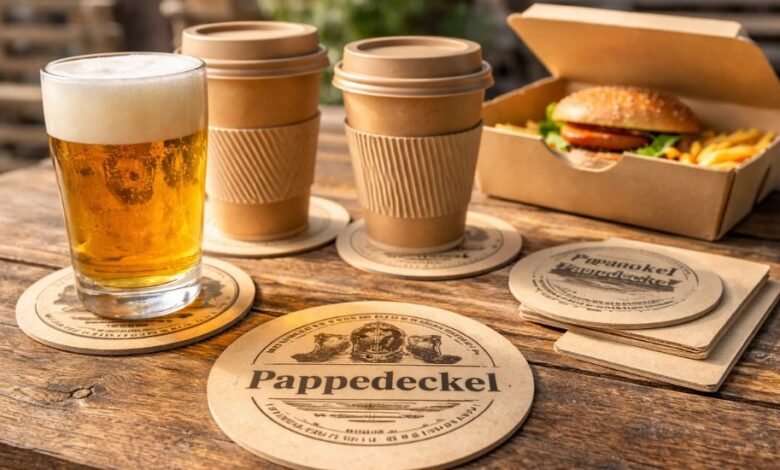
The term Pappedeckel might sound unfamiliar to many people outside German-speaking regions, yet it represents a surprisingly important everyday object with a long history and wide range of uses. In simple terms, a Pappedeckel refers to a cardboard lid, cover, or coaster made from pressed paperboard or pulp. While the word itself originates from German, the concept has spread globally through industries such as beverage service, packaging, and food delivery.
From beer coasters in traditional European pubs to eco-friendly coffee cup lids and packaging covers, Pappedeckel products play an essential role in protecting surfaces, covering drinks, and supporting sustainable packaging practices. Over the years, these simple cardboard items have evolved from basic drink protectors into tools for branding, advertising, and environmental responsibility.
This article explores the meaning, origin, manufacturing, uses, benefits, and modern relevance of Pappedeckel, showing how a simple piece of cardboard became an important part of global beverage culture and sustainable packaging.
What Does Pappedeckel Mean?
The word Pappedeckel is derived from two German words:
- Pappe – cardboard or thick paperboard
- Deckel – lid or cover
Together, the term literally means “cardboard lid” or “cardboard cover.”
In practical use, Pappedeckel usually refers to cardboard discs or lids made from compressed paper fibers. These products are commonly used as:
- Beer coasters
- Drink covers
- Cardboard lids for containers
- Protective cardboard packaging covers
Although the word often appears in the context of beer coasters, it is also used broadly to describe various cardboard covers or lids used in everyday products.
Because cardboard is lightweight, inexpensive, and biodegradable, Pappedeckel products have become a popular alternative to plastic items in many industries.
The Historical Origins of Pappedeckel
Early Beverage Protection
The origins of Pappedeckel are closely linked with European beer culture, particularly in Germany during the 19th century.
In traditional beer halls, drinks were often served outdoors where insects, dust, and debris could fall into mugs. Wealthier patrons sometimes used beer mugs with metal lids to protect their drinks. However, many drinkers relied on simpler solutions, such as placing felt or cloth covers over their mugs.
These early coverings served two main purposes:
- Protecting drinks from insects and dust
- Preventing spills and contamination
However, cloth and felt materials were not ideal because they absorbed moisture and could quickly become unhygienic.
The Invention of the Modern Beer Coaster
The transition to cardboard drink covers occurred in the late 1800s.
One of the major breakthroughs came in 1892, when a German manufacturer patented a method for producing beer mats from wood pulp. These mats were created by compressing paper fibers into thick discs that could absorb moisture effectively.
The invention transformed the beverage industry because these cardboard coasters were:
- Cheap to produce
- Disposable
- Hygienic
- Highly absorbent
Soon, breweries across Germany began producing branded Pappedeckel coasters featuring logos, slogans, and advertisements.
By the early 20th century, cardboard beer mats had become standard in pubs throughout Europe.
How Pappedeckel Are Made
Modern Pappedeckel products are usually made from pressed wood pulp or recycled cardboard fibers. The manufacturing process involves several steps.
1. Raw Material Collection
The process begins with raw materials such as:
- Recycled paper
- Wood pulp
- Cardboard fibers
These materials are mixed with water to form a pulp mixture.
2. Pulp Processing
The pulp is refined and cleaned to remove impurities. The fibers are then compressed into sheets with a specific thickness and density.
This stage determines the absorbency and strength of the final product.
3. Pressing and Drying
The pulp sheets are pressed under high pressure to remove excess water and create a firm cardboard structure.
After pressing, the sheets are dried using industrial drying systems.
4. Cutting and Shaping
The dried sheets are cut into specific shapes, such as:
- Round coasters
- Square coasters
- Custom shapes for branding
The typical thickness of a beer coaster Pappedeckel is about 1.2 to 1.5 millimeters.
5. Printing and Branding
Many Pappedeckel products are printed with:
- Brewery logos
- Brand messages
- Promotional artwork
- Event information
This makes them effective marketing tools for businesses.
Common Uses of Pappedeckel
Although originally used for beer coasters, Pappedeckel products now serve a variety of purposes across different industries.
1. Beer and Drink Coasters
The most common use of Pappedeckel is as a coaster placed under a glass or mug.
The coaster absorbs condensation from cold drinks and protects tables from water damage.
This helps:
- Prevent stains on wooden furniture
- Reduce slipping caused by moisture
- Maintain cleanliness in bars and restaurants
2. Drink Covers
Historically, Pappedeckel were sometimes placed on top of glasses to protect beverages from insects, especially in outdoor beer gardens.
Even today, some establishments still use this practice in outdoor dining areas.
3. Coffee Cup Lids and Food Packaging
Cardboard lids inspired by the Pappedeckel concept are now used in:
- Coffee cups
- Fast-food containers
- Takeaway packaging
These lids provide a sustainable alternative to plastic.
4. Advertising and Branding
Businesses frequently use Pappedeckel as advertising tools.
Because they are inexpensive and widely visible in bars and cafes, they provide excellent opportunities for brand promotion.
Printed coasters often feature:
- Company logos
- New product announcements
- Promotional campaigns
- Event advertisements
Many breweries consider coaster advertising an essential part of their marketing strategy.
Cultural Importance of Pappedeckel
In Germany and other European countries, Pappedeckel have become part of local drinking culture.
Tracking Drink Orders
In many traditional pubs, servers mark tally marks on the coaster to track how many drinks a customer has ordered.
At the end of the visit, the number of marks determines the total bill.
This simple system has been used for decades in beer halls.
Tegestology: The Hobby of Collecting Coasters
Beer coasters have also inspired a collecting hobby known as tegestology.
Collectors gather Pappedeckel from:
- Breweries
- Festivals
- Restaurants
- Historic pubs
Some collections include thousands of coasters from around the world.
Rare or vintage coasters can even become valuable collector items.
Environmental Advantages of Pappedeckel
One of the main reasons for the continued popularity of Pappedeckel is their environmental sustainability.
Compared to plastic alternatives, cardboard products offer several benefits.
Biodegradable Materials
Pappedeckel are made primarily from natural fibers that break down easily in the environment.
Recyclable Production
Most cardboard coasters are produced using recycled paper, reducing waste and conserving resources.
Reduced Plastic Use
Using cardboard lids instead of plastic helps reduce plastic pollution in landfills and oceans.
Energy Efficiency
Producing cardboard products often requires less energy than manufacturing plastic items.
Because of these advantages, many companies are shifting toward paper-based packaging solutions inspired by the Pappedeckel concept.
Modern Applications in Industry
Today, Pappedeckel products are used in many industries beyond bars and breweries.
Food and Beverage Industry
Restaurants, cafes, and fast-food chains use cardboard lids and coasters to improve hygiene and sustainability.
Packaging Industry
Cardboard covers are used to protect products during transportation.
Event Marketing
Promotional coasters are distributed at trade shows, festivals, and events.
Creative Design
Some artists and designers use printed coasters for decorative purposes or creative projects.
Why Pappedeckel Remains Relevant Today
Despite technological advances and new materials, Pappedeckel continues to remain relevant for several reasons.
First, it is simple and cost-effective. Producing cardboard coasters is inexpensive, making them accessible for businesses of all sizes.
Second, Pappedeckel products are environmentally friendly, which aligns with the growing global focus on sustainability.
Third, they offer practical benefits, such as moisture absorption and surface protection.
Finally, they serve as a unique marketing medium, allowing companies to promote their brand directly to customers in restaurants and social settings.
The Future of Pappedeckel
The future of Pappedeckel is closely tied to the development of sustainable materials and eco-friendly packaging solutions.
As governments and consumers demand reduced plastic use, cardboard alternatives will likely become even more popular.
Innovations may include:
- Water-resistant biodegradable coatings
- Fully compostable cardboard lids
- Recycled fiber manufacturing improvements
- Smart packaging designs
These developments could expand the role of Pappedeckel products in both food service and packaging industries.
Conclusion
The Pappedeckel may appear to be a simple piece of cardboard, but its history and impact reveal much more. Originating in German beer culture during the 19th century, it evolved from a basic drink protector into a globally recognized product used in bars, restaurants, packaging, and advertising.
Its absorbent structure, low cost, and environmental benefits have made it a practical solution for businesses and consumers alike. From traditional beer coasters to eco-friendly coffee lids, Pappedeckel products demonstrate how simple materials can serve multiple purposes while supporting sustainability.
As the world continues to seek alternatives to plastic and environmentally harmful packaging, the humble Pappedeckel will likely remain an important part of everyday life.
For readers interested in learning more about trends in packaging, sustainability, and everyday consumer products, resources and insights are regularly shared on blogs such as marketblog, where discussions about practical innovations like Pappedeckel continue to grow.