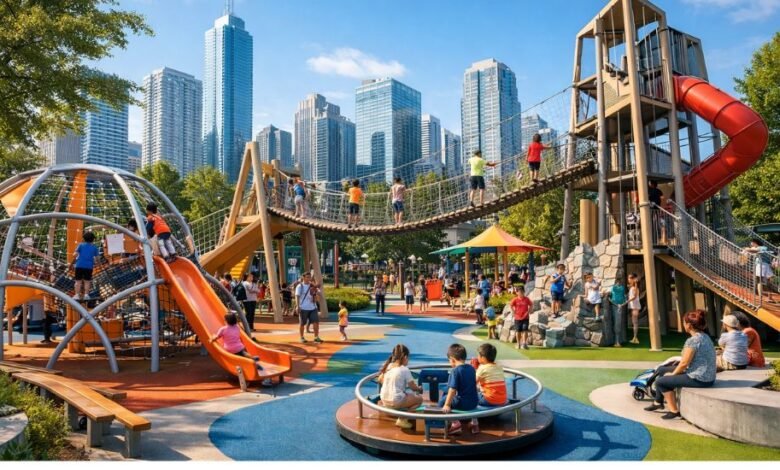
Cities around the world are becoming increasingly dense as populations grow and urban development expands. With buildings, roads, and commercial spaces occupying most of the land, access to open recreational areas has become limited, especially for children. This challenge has led to the rise of the urban playground—a creative and practical solution that transforms small or underused city spaces into safe, engaging environments for play and community interaction.
Urban playgrounds are not just traditional play areas with swings and slides. They are thoughtfully designed spaces that integrate creativity, safety, sustainability, and community needs. From rooftop play areas and pocket parks to artistic climbing structures and nature-inspired play zones, urban playgrounds are redefining how cities support healthy childhood development and community wellbeing.
This article explores the concept of urban playgrounds, their benefits, design strategies, types, and their growing importance in modern urban planning.
What is an Urban Playground?
An urban playground is a recreational play space designed specifically for densely populated city environments. Unlike traditional large parks typically found in suburban or rural areas, urban playgrounds are designed to fit into compact spaces within cities such as:
- Small city parks
- Rooftops
- Public plazas
- Residential complexes
- Vacant or repurposed lots
- Community centers
These playgrounds are created to maximize the use of limited space while still providing children with opportunities for physical activity, creativity, and social interaction.
Urban playgrounds often include innovative play structures, colorful designs, interactive features, and natural elements. Their goal is to make urban environments more child-friendly and accessible for families living in crowded cities.
The Growing Need for Urban Playgrounds
As cities expand, many neighborhoods struggle with limited access to safe outdoor spaces. Children living in apartments or densely built neighborhoods often have fewer opportunities to play outside compared to those in suburban areas.
Urban playgrounds address this issue by creating accessible play environments close to where families live. Instead of requiring large areas of land, these playgrounds use creative design strategies to transform small urban spaces into vibrant recreational areas.
In modern city planning, providing spaces for play is increasingly seen as essential. Playgrounds contribute to healthier communities, improve quality of life, and help cities become more inclusive and family-friendly.
Benefits of Urban Playgrounds
Urban playgrounds provide numerous advantages for children, families, and communities. They support physical health, social interaction, mental wellbeing, and even local economic development.
1. Promoting Physical Activity
Children need regular physical activity for healthy growth and development. Urban playgrounds encourage movement through climbing, running, sliding, and interactive play equipment.
Physical benefits include:
- Improved coordination and balance
- Stronger muscles and bones
- Better cardiovascular health
- Reduced risk of childhood obesity
By providing safe spaces for active play, urban playgrounds help children stay physically healthy even in densely populated environments.
2. Supporting Social Development
Playgrounds are also social spaces where children learn important life skills. When kids play together, they develop communication abilities, teamwork, and problem-solving skills.
Urban playgrounds bring together families from different backgrounds, allowing children to interact with peers and build friendships. This interaction strengthens community bonds and promotes inclusivity.
Parents and caregivers also benefit from these social spaces, as playgrounds often become places where neighbors meet and connect.
3. Enhancing Mental and Emotional Wellbeing
Outdoor play is strongly linked to improved mental health in children. Spending time in playful environments helps reduce stress and anxiety while encouraging creativity and imagination.
Urban playgrounds provide spaces where children can explore, experiment, and express themselves freely. Creative play structures, artistic installations, and interactive features stimulate curiosity and learning.
For families living in busy cities, these playgrounds offer a refreshing break from crowded streets and indoor environments.
4. Building Stronger Communities
Urban playgrounds serve as community hubs where residents gather for recreation and social interaction. Events, family gatherings, and neighborhood activities often take place around playgrounds, making them important social spaces.
Communities with accessible playgrounds often experience:
- Greater neighborhood engagement
- Increased sense of belonging
- Safer public spaces
- Improved quality of life
These spaces help transform urban neighborhoods into vibrant and welcoming environments.
5. Increasing Urban Livability and Property Value
Cities that invest in recreational spaces often become more attractive places to live. Families prefer neighborhoods where children have access to safe outdoor play areas.
Urban playgrounds can contribute to:
- Increased property values
- More appealing residential neighborhoods
- Higher quality urban environments
- Greater tourism and community interest
Because of these benefits, many city planners now consider playground development an important part of urban design.
Key Features of Modern Urban Playgrounds
Urban playgrounds have evolved significantly over the years. Modern designs focus on creativity, inclusivity, and sustainability.
Compact and Space-Efficient Design
Because space is limited in cities, urban playgrounds are often designed to make the most of small areas. Designers use vertical play structures, multi-level platforms, and compact equipment to maximize play opportunities.
Some playgrounds are built on rooftops, under bridges, or within small pocket parks between buildings.
Interactive and Creative Structures
Modern playgrounds often feature unique and artistic play equipment such as:
- Climbing sculptures
- Rope structures
- Interactive musical installations
- Colorful geometric play zones
These elements make playgrounds visually appealing while encouraging imaginative play.
Inclusive Design
Inclusive playgrounds ensure that children of all abilities can participate in play activities. These spaces include accessible equipment, ramps, sensory play areas, and wheelchair-friendly pathways.
The goal is to create environments where every child feels welcome and included.
Natural Play Elements
Many urban playgrounds incorporate natural materials and landscapes. These elements allow children to connect with nature even within a city environment.
Examples include:
- Wooden structures
- Sand and water play areas
- Rock climbing features
- Trees and greenery
Nature-based play areas help children develop creativity and environmental awareness.
Types of Urban Playgrounds
Urban playgrounds can take many forms depending on available space, community needs, and design goals.
Pocket Playgrounds
Pocket playgrounds are small play areas built within compact spaces such as empty lots, street corners, or small parks. Despite their size, these playgrounds offer creative play opportunities through innovative design.
Rooftop Playgrounds
In cities with limited ground space, rooftops are sometimes transformed into safe and exciting play areas. These playgrounds often include soft flooring, safety barriers, and colorful play equipment.
Rooftop playgrounds are commonly found in schools, apartment buildings, and shopping centers.
Adventure Playgrounds
Adventure playgrounds encourage creativity by allowing children to build and explore using various materials. These playgrounds may include tools, loose parts, and flexible structures that children can rearrange and customize.
This type of play encourages independence, imagination, and problem-solving skills.
Natural Playgrounds
Natural playgrounds use elements from the natural environment to create engaging play experiences. Instead of traditional plastic equipment, these playgrounds may include logs, boulders, water features, and vegetation.
They offer children a more organic and exploratory play environment.
Inclusive Playgrounds
Inclusive playgrounds are designed to accommodate children with physical, sensory, or developmental disabilities. These spaces promote equal participation and social interaction among all children.
Accessible swings, sensory panels, and smooth pathways are common features of inclusive playgrounds.
Design Strategies for Urban Playgrounds
Creating successful urban playgrounds requires thoughtful planning and collaboration between architects, designers, and communities.
Some important design strategies include:
Maximizing Limited Space
Urban playgrounds must use space efficiently. Designers often combine multiple play activities into single structures to maximize functionality.
Vertical designs and modular equipment help create more play opportunities within small areas.
Prioritizing Safety
Safety is a critical aspect of playground design. Urban playgrounds must include soft flooring materials, secure equipment, and proper safety barriers to prevent injuries.
Regular maintenance and inspection are also essential to ensure a safe play environment.
Encouraging Community Participation
Community involvement plays a key role in designing successful playgrounds. When residents contribute ideas and feedback, the final design better reflects the needs and preferences of local families.
Public workshops and community planning sessions are often used to gather input.
Incorporating Sustainability
Many modern playgrounds use environmentally friendly materials and sustainable design practices. Recycled materials, energy-efficient lighting, and water-management systems can help reduce environmental impact.
Green playgrounds also teach children about sustainability and environmental responsibility.
The Future of Urban Playgrounds
Urban playgrounds are becoming an essential part of city planning around the world. As urban populations continue to grow, cities are increasingly prioritizing child-friendly infrastructure.
Future urban playgrounds may include:
- Smart interactive play equipment
- Digital learning features
- Eco-friendly design materials
- Multi-purpose community spaces
Innovative designs will continue to transform ordinary city spaces into vibrant environments that support children’s development and community wellbeing.
Urban playgrounds demonstrate that even the busiest cities can provide joyful, creative spaces for play.
Conclusion
Urban playgrounds are much more than simple recreational areas. They represent a vital investment in the wellbeing of children, families, and communities living in modern cities. By transforming small or underused urban spaces into safe and engaging play environments, these playgrounds help cities become more inclusive, healthy, and vibrant.
From pocket parks and rooftop play areas to artistic climbing structures and nature-inspired landscapes, urban playgrounds show how creative design can overcome the challenges of limited space. They encourage physical activity, support social development, and strengthen community connections.
As urban development continues to expand, the importance of these spaces will only grow. By prioritizing thoughtful playground design, cities can ensure that every child—no matter where they live—has access to the joy and benefits of outdoor play. For readers interested in exploring more ideas about urban spaces, community development, and lifestyle topics, platforms like marketblog continue to share helpful insights and informative content.