William Giles: Pioneer of Colour Printmaking and Innovative British Artist

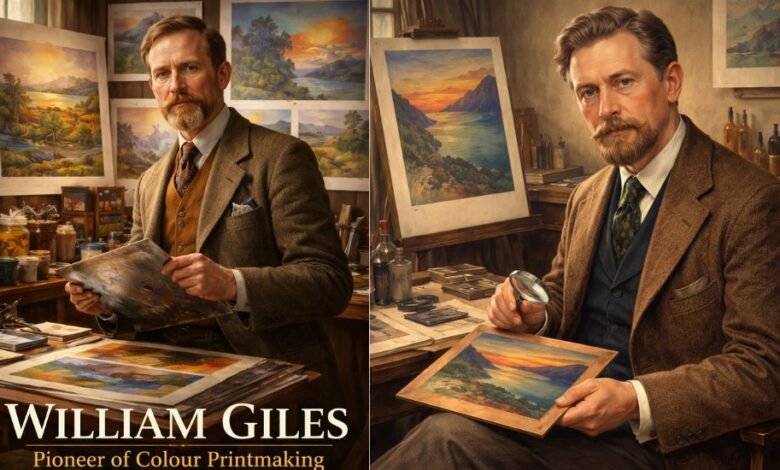
The world of fine art and printmaking has been shaped by many influential artists, but few have contributed as uniquely to colour printmaking as William Giles. Known for his experimental approach and innovative techniques, Giles played an important role in transforming traditional printmaking methods during the early twentieth century. His dedication to exploring colour printing processes helped establish new artistic possibilities that influenced generations of artists.
William Giles was not only a painter but also a highly skilled printmaker, engraver, and lithographer. Throughout his career, he experimented with different printing methods and materials to achieve vibrant colour effects and refined textures in his work. His artistic curiosity and technical innovations made him one of the most respected figures in British printmaking.
This article explores the life, artistic journey, achievements, and legacy of William Giles, highlighting why he remains an important figure in the history of art.
Early Life and Background
William Giles was born in 1872 in Reading, Berkshire, England. During the late nineteenth century, Britain was experiencing a vibrant artistic and cultural movement, and Giles grew up in an environment where artistic expression was gaining increasing recognition.
From a young age, Giles displayed a strong interest in drawing and visual art. His natural talent encouraged him to pursue formal education in art. He enrolled at the Reading School of Art, where he received foundational training in drawing, painting, and design. The school helped him develop the technical skills that would later become essential for his career in printmaking.
Recognizing his potential, Giles continued his studies at the Royal College of Art in London, one of the most prestigious art institutions in Britain. This period of education allowed him to study under experienced artists and expand his knowledge of artistic techniques.
His time at the Royal College of Art helped shape his artistic philosophy and introduced him to the world of professional art exhibitions and printmaking.
Artistic Education in Paris
Like many artists of his time, William Giles traveled to Paris, which was considered the artistic capital of Europe. Paris was home to influential art movements and famous art schools that attracted artists from across the world.
During his stay in Paris, Giles was exposed to new artistic ideas, innovative printing techniques, and different styles of artistic expression. The city’s vibrant art scene encouraged experimentation and creativity.
This experience broadened Giles’s perspective on art and inspired him to experiment with new methods of printmaking. The influence of European art movements and techniques played a significant role in shaping his future work.
Beginning of His Artistic Career
After completing his studies, William Giles began building his career as both a painter and printmaker. While many artists focused primarily on painting, Giles became increasingly interested in the technical and creative possibilities of printmaking.
Printmaking during this period was evolving, and artists were experimenting with different techniques such as etching, lithography, and wood engraving. Giles was particularly fascinated by colour printing and sought ways to improve existing methods.
His early works demonstrated strong attention to detail, careful use of colour, and a willingness to experiment with unconventional techniques.
These qualities helped him gain recognition within the British art community.
Innovation in Colour Printmaking
One of William Giles’s most important contributions to art was his innovation in colour printmaking.
Traditional colour printing methods often relied on multiple blocks or plates, with each plate responsible for a specific colour. While this process could produce impressive results, it was also complicated and time-consuming.
Giles believed there was room for improvement. He experimented with new printing techniques that allowed artists to achieve vibrant colours without relying heavily on traditional key-block systems.
His experiments led to the development of a distinctive technique often referred to as the “Giles Method.”
This method involved:
- Printing with oil-based colours from metal plates
- Creating layered colour effects
- Producing rich textures and tonal variations
- Simplifying the printing process while maintaining artistic quality
The Giles Method allowed artists to create unique prints with greater flexibility and artistic freedom.
The Society of Graver-Printers in Colour
William Giles was not only an innovator but also an advocate for the advancement of printmaking as a respected art form.
In the early 1930s, he helped establish the Society of Graver-Printers in Colour. The society aimed to encourage artists to explore colour printing techniques and promote the appreciation of colour prints among art collectors and the public.
The organization provided a platform where artists could:
- Share techniques and ideas
- Exhibit their work
- Encourage innovation in printmaking
Through this society, Giles contributed to strengthening the community of printmakers in Britain and supporting the development of modern colour printing techniques.
Artistic Style and Characteristics
William Giles developed a distinctive artistic style that combined traditional craftsmanship with experimental techniques.
Several characteristics define his work:
1. Strong Use of Colour
Colour was one of the most important elements in Giles’s prints. He explored ways to create bold and vibrant colour compositions that stood out from traditional monochrome prints.
2. Texture and Depth
His innovative printing methods allowed him to create textures and layered colour effects that added depth to his artwork.
3. Experimental Approach
Rather than following traditional printmaking rules, Giles constantly experimented with materials and processes. This approach helped him discover new possibilities within printmaking.
4. Influence from Japanese Prints
Early in his career, Giles was influenced by Japanese woodblock printing techniques, which were admired by many European artists during the late nineteenth and early twentieth centuries.
However, he later moved beyond these traditional methods and developed his own unique techniques.
Exhibitions and Professional Recognition
William Giles gained recognition through exhibitions in several prestigious art institutions. His work was displayed in respected galleries and exhibitions, helping him establish a strong reputation in the British art world.
Some of the notable institutions where his work appeared include:
- The Royal Academy
- The Royal Institute of Oil Painters
- The Royal Institute of Painters in Water-Colours
Exhibiting in these institutions was considered a major achievement for artists of that time. It helped Giles gain visibility among collectors, critics, and fellow artists.
His reputation as an innovator in printmaking continued to grow as more artists became interested in colour printing techniques.
Contribution to Modern Printmaking
William Giles’s influence extended beyond his own artwork. His research and experiments helped shape the future of colour printmaking.
Before Giles’s innovations, colour prints were often considered less significant than traditional paintings. However, his techniques demonstrated that prints could be just as expressive and visually powerful.
By introducing new methods and encouraging experimentation, Giles helped elevate printmaking to a respected form of fine art.
Many artists who followed him adopted similar experimental approaches, contributing to the development of modern printmaking.
Later Life and Legacy
William Giles continued to work and experiment with printmaking techniques throughout his life.
Despite the challenges faced by artists during the early twentieth century—including economic difficulties and changing art trends—he remained committed to his craft.
He passed away in 1939, leaving behind a legacy of artistic innovation and technical excellence.
Today, Giles’s work is studied by art historians and printmakers who seek to understand the development of colour printing techniques in modern art.
His contributions are recognized in museums, galleries, and academic discussions about the evolution of printmaking.
Why William Giles Still Matters Today
Even decades after his death, William Giles remains an important figure in the art world.
His work is significant because:
- He pioneered new colour printmaking techniques.
- He encouraged artistic experimentation.
- He helped establish printmaking as a respected fine art discipline.
- He supported other artists through professional organizations.
Artists today continue to explore experimental printmaking methods, many of which trace their roots back to the innovations introduced by Giles.
His dedication to artistic exploration serves as an inspiration for modern printmakers and visual artists.
Conclusion
William Giles stands out as one of the most innovative printmakers of the early twentieth century. His dedication to experimentation and artistic excellence allowed him to develop new techniques that transformed colour printmaking.
From his early education in Reading and London to his artistic experiences in Paris, Giles built a career defined by creativity and technical mastery. His contributions to printmaking not only enhanced the artistic possibilities of colour printing but also helped elevate printmaking as an important art form.
Through his artwork, innovations, and involvement in artistic communities, William Giles left a lasting impact on the world of art.
For readers interested in learning more about influential artists and historical figures in the creative world, marketblog continues to provide informative articles that explore the stories behind remarkable individuals like William Giles and their contributions to art and culture.